DHL careers pay a forklift operator about $20 an hour. An operations manager at DHL Supply Chain earns somewhere around $89,000 a year, per Glassdoor's 2026 salary data.
Most people picture DHL as the yellow van dropping off packages. The company runs five separate divisions across 220 countries, with roughly 584,000 employees on payroll as of 2025, per DHL Group's own corporate reporting. Parcel delivery is a fraction of what happens.
This article is for the mid-career professional stuck in a single-industry logistics role, looking to move laterally into something global without starting over. If you want real specifics on what DHL pays and where the hidden career bottlenecks sit, keep reading.
How DHL's Five Divisions Split the Work
DHL Group operates through five divisions: DHL Express, DHL Global Forwarding and Freight, DHL Supply Chain, DHL eCommerce, and Deutsche Post.
Each division runs as a semi-independent business with its own hiring pipeline, salary bands, and promotion tracks.
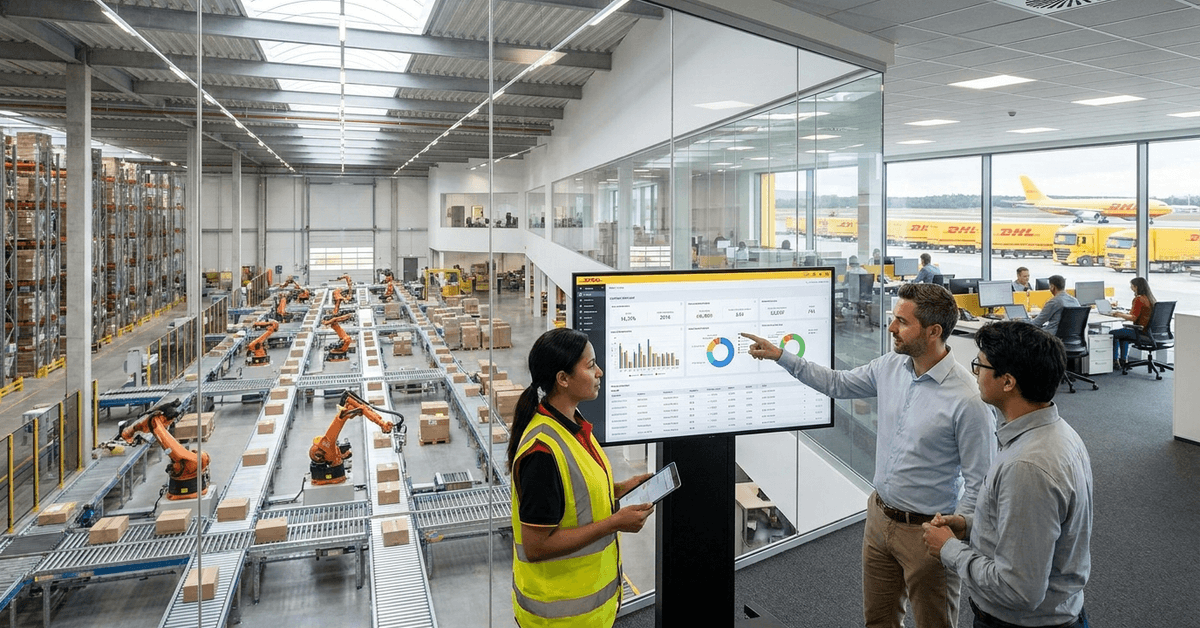
I'd argue that DHL Supply Chain is the most underrated division for career mobility based on the €217 billion contract logistics market it operates in.
That division alone covers warehousing, transport management, and solutions design across more than 50 countries.
DHL Express vs. DHL Supply Chain
DHL Express handles time-sensitive courier and parcel shipments. DHL Supply Chain handles contract logistics: running entire warehouse operations, managing inventory, and designing distribution networks for corporate clients.
The career paths inside each division barely overlap. A courier driver at DHL Express and a logistics planner at DHL Supply Chain work for the same parent company but exist in completely separate job families.
If you apply to "DHL" without specifying the division, your resume might land in the wrong pipeline entirely.
DHL Global Forwarding and Freight
This division manages air freight and ocean freight at scale. DHL Global Forwarding is the world leader in air freight services. Roles here tend toward freight coordination, customs brokerage, and trade compliance.
What DHL Supply Chain Jobs Pay in 2026
Salary data at DHL varies by role, location, and division. Glassdoor's 2026 salary submissions give a clearer picture than DHL's own job postings, which often list wide ranges.
The numbers break down like this for U.S.-based DHL Supply Chain roles:
| Role | Estimated Average (USD/year) | Range |
|---|---|---|
| Forklift Operator | ~$41,900 ($20.15/hr) | $17-$23/hr |
| Warehouse Manager | ~$77,750 | $60K-$86K |
| Operations Manager II | ~$78,000 | $72K-$85K |
| Operations Manager I | ~$90,000 | $85K-$100K |
| Senior Operations Manager | ~$159,400 | $95K-$245K |
Senior Operations Managers at DHL Supply Chain can reach $245,000 at the 90th percentile, per Glassdoor's April 2026 data. That ceiling is higher than most people expect from a logistics company.
Where Geography Changes the Numbers
An Operations Manager in Memphis, Tennessee averages about $102,600 per year at DHL Supply Chain, per Glassdoor's June 2026 data. The same title nationally sits closer to $89,000.
Memphis is a major DHL hub, and hub locations tend to pay 10% to 15% above the national average for the same title.
Career Paths That Don't Require a Logistics Degree
DHL hires into technology, finance, data science, cybersecurity, and sustainability roles. The company's careers portal lists positions grouped by function, and the non-logistics categories have grown steadily.
A few areas worth knowing about:
- IT and data science roles cover machine learning, cloud infrastructure, IoT integration, and warehouse automation software
- Finance and controlling positions exist at regional and divisional levels, often requiring experience with SAP or similar ERP systems
- Sustainability and ESG roles have expanded as DHL pushes its GoGreen program targets through 2030
- Solutions design engineers model distribution networks, run simulations, and redesign warehouse layouts for new clients
My take on the solutions design engineer path: I think it's the single most transferable role DHL offers, based on how Six Sigma and network modeling skills price on the open market after 3 to 5 years.
Someone leaving that role can move into supply chain consulting at a premium.
The Customer Service Angle
DHL's account management teams handle contracts for companies ranging from small ecommerce brands to Fortune 500 manufacturers.
People coming from hospitality or retail backgrounds sometimes transition into these roles. The soft skills transfer. The supply chain knowledge can be learned on the job.
How DHL's Internal Promotion System Works
DHL has a structured tier system for operations roles. Operations Manager II sits below Operations Manager I, which sits below Senior Operations Manager.
The national salary range posted on DHL's own careers site confirms this: $72,000-$85,000 for OM II, $85,000-$100,000 for OM I.
Promotion between tiers typically requires a combination of time in role, performance reviews, and open headcount.
Cross-department moves happen, but they require initiative. A warehouse planner can shift into project management. A customer service advisor can move into account management.
International Assignments
DHL operates in 220 countries. International transfers are possible, particularly for mid-level managers and above. The company runs graduate trainee programs in larger markets that rotate new hires through multiple business units.
One thing to know: international transfers at DHL are not automatic. The company has the infrastructure for it, but you need to actively pursue relocation. Waiting for someone to offer you a posting in Singapore rarely works.
The DHL Application Process Step by Step
Most applications start at the official DHL Careers Portal. Country-specific roles appear alongside global postings, grouped by job function and location.
A standard application requires:
- A CV or resume tailored to the specific division and role
- A short motivational letter (some roles skip this)
- Psychometric assessments for management-track positions
- Assessment centers for some operational roles, where candidates work through simulated logistics scenarios
Reference and background checks are standard, especially for regulated roles in pharmaceuticals or defense logistics.
Response times vary. Online forums consistently mention slow feedback loops, sometimes stretching 4 to 6 weeks between application and first interview.
One Mistake That Costs Applicants
Applying to "DHL" generically instead of targeting a specific division and role level is the most common error.
DHL Supply Chain, DHL Express, and DHL Global Forwarding each run separate recruitment teams. A strong resume for a Supply Chain operations role might get filtered out if it lands in the Express pipeline.
Why I'd Skip the "Start in the Warehouse" Advice
The standard career advice for logistics says to start on the warehouse floor and work your way up.
I'd push back on that for anyone with 3 or more years of professional experience in any field, based on DHL's own posted salary data showing that lateral entry into Operations Manager II at $72,000 is available without warehouse floor tenure.
The warehouse-first path makes sense for people entering the workforce. But if you already have project management, finance, or tech experience, applying directly to a mid-level role saves years.
DHL's tiered system lets you enter at the appropriate level. The floor experience can be picked up through cross-training after you're hired.
DHL's Workforce Is Shrinking. Does That Matter?
DHL Group's total workforce dropped from about 601,000 employees in 2023 to roughly 584,000 by the end of 2025, per Revelio Labs workforce data. That's a 1.8% decline year over year.
Does a shrinking headcount mean fewer opportunities? Not necessarily. DHL's 2025 revenue hit approximately €83 billion.
The company is doing more with fewer people, which usually means automation replacing repetitive roles while technical and management positions grow.
The warehouse associate role is the one most affected by automation. The solutions engineer, data analyst, and operations manager roles are expanding. Knowing which side of that line your target job sits on matters.
Questions People Ask About DHL Careers
These come up often and deserve quick, direct answers.
- Q: Can you work at DHL without a degree?
Yes. Warehouse, driver, and many operational roles do not require a college degree. DHL posts minimum requirements on each listing, and a large portion of Supply Chain roles prioritize experience and certifications over formal education. - Q: Does DHL pay for relocation?
Some roles include relocation packages, particularly international assignments and senior management positions. The specifics depend on the division, the destination country, and the seniority of the role. Always confirm relocation support during the offer stage, not after accepting. - Q: How long does DHL's hiring process take?
Expect 4 to 8 weeks from application to offer for most roles. Assessment center invitations and background checks add time. Online applicant forums frequently mention delays, so following up after two weeks is reasonable. - Q: Is DHL a good company for career changers?
DHL's account management and customer service teams regularly hire people from hospitality, retail, and administrative backgrounds. The transition works best when you can show transferable skills like team coordination, client communication, or process improvement. - Q: What certifications help with DHL Supply Chain jobs?
Six Sigma (Green Belt or Black Belt), APICS CSCP, and project management certifications like PMP carry weight for mid-level and senior roles. Lean methodology training also comes up frequently in DHL job descriptions for continuous improvement positions.
Conclusion
DHL's five divisions each run their own hiring, salary bands, and promotion ladders under one brand name. Knowing which division fits your skills matters more than knowing the company name.
The salary ceiling for operations managers reaches higher than most logistics competitors pay for the same title. A shrinking total workforce does not mean fewer mid-level and technical openings are available.