Amazon warehouse jobs pay between $18 and $22 per hour for entry-level roles in 2026. That puts a first-year associate somewhere around $37,000 to $46,000 annually, before overtime or shift premiums kick in.
But the hourly rate is only one number in a longer equation. Amazon's back-loaded stock vesting schedule, the Career Choice tuition program, and day-1 benefits create a compensation structure that looks very different at month three than it does at year two.
This article is for career changers weighing Amazon against other warehouse or delivery gigs. If you want real numbers, specific role breakdowns, and an honest look at what the daily grind costs you physically, keep reading.
How Much Do Amazon Warehouse Workers Make Per Hour?
Amazon's base hourly wage for warehouse and fulfillment center associates sits between $18 and $22 per hour in most U.S. markets as of mid-2026, according to ZipRecruiter's September 2026 data.
The national average lands around $19 per hour for a standard warehouse worker role.
Pay Differences by Role
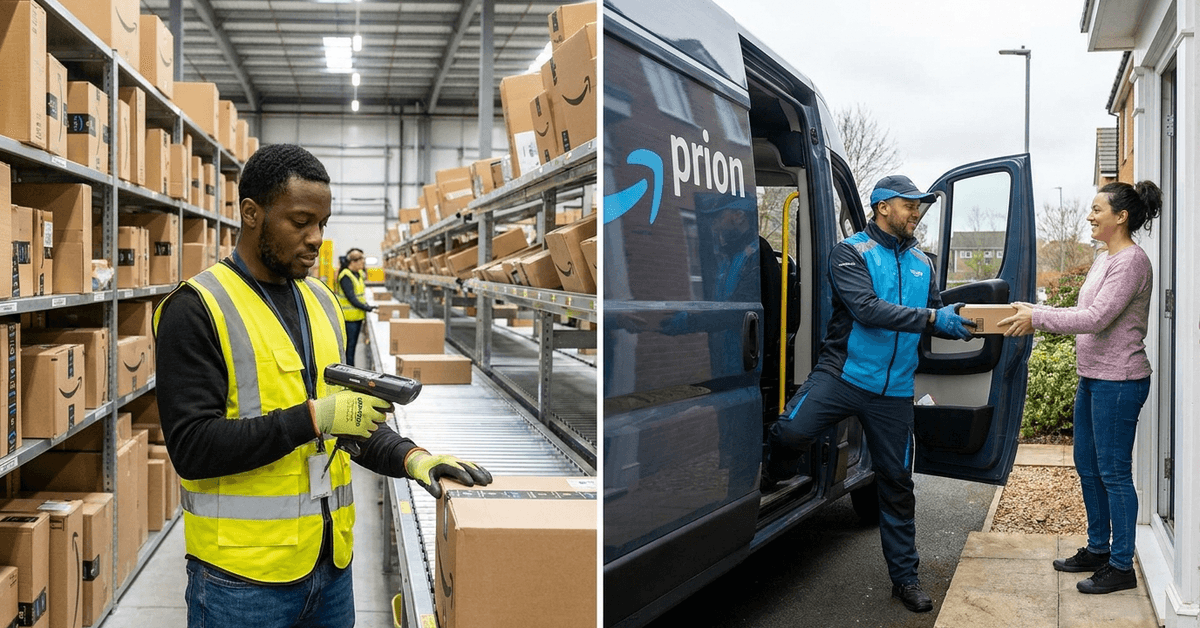
A Picker, Packer, and Sort Associate all earn within a narrow band. The real pay jump comes with the Process Assistant title, which runs $22 to $28 per hour and can push annual earnings above $52,000 depending on facility and premiums.
High-cost cities push the ceiling higher. A warehouse worker in Stockton, California, can see a median rate near $24 per hour. Rural locations sit closer to the $18 floor.
Night Shifts and Weekend Premiums
Shift differentials add $1.50 to $3.00 per hour on top of your base rate for overnight or weekend schedules. During peak seasons like Q4 and Prime Day, sign-on bonuses between $1,000 and $3,000 show up in job postings.
Amazon Delivery Driver Pay: DSP vs. Flex
Two paths exist for driving with Amazon, and they pay differently because one makes you an employee and the other makes you a contractor.
DSP drivers work as W-2 employees for a Delivery Service Partner. Indeed's April 2026 data puts the average at $19.80 per hour, with most listings falling in the $18 to $22 range. You get a company van, benefits through your DSP, and a fixed schedule.
Amazon Flex drivers are 1099 independent contractors earning $18 to $25 per hour gross, per Amazon's own published figures. Blocks run 2 to 6 hours, and you choose them through the Flex app.
The Flex Math Most People Skip
I would pick DSP over Flex for anyone planning to do this more than 10 hours a week, and the IRS mileage rate tells you why. The 2026 standard rate is 72.5 cents per mile.
A typical 4-hour Flex block paying $85 gross might cost $30 or more in vehicle expenses. That drops your effective rate to roughly $13 to $15 per hour after gas, depreciation, and self-employment tax.
Flex works as a side gig with a fuel-efficient car. It does not work as a primary income source once you run the after-expense numbers honestly.
Career Choice: The Benefit That Changes the Warehouse Job Calculation
Amazon's Career Choice program pays up to $5,250 per year in tuition, and Amazon sends the money directly to the school. You never front the cost.
Eligibility kicks in after 90 days of employment, and the program covers certificates, associate degrees, and bachelor's degrees at over 400 partner schools.
Why I Think "Don't Stay at Amazon Long" Is Bad Advice
The standard line on Amazon warehouse work is to treat it as temporary. Get in, save some cash, get out. I think that advice misses a $15,750 opportunity for anyone without a degree.
Three years at Amazon using Career Choice gives you $15,750 in prepaid tuition toward nursing, IT certifications, or a CDL. A community college associate degree costs roughly $10,000 to $12,000 out of pocket nationally. Amazon pays that and still gives you $19 an hour while you study.
Jumping to a $20-per-hour warehouse job at a competitor that offers no tuition benefit costs you more than the extra dollar per hour gains. The math only works against staying if you already have the credential you want.
What a Typical Day Looks Like Inside the Warehouse
Amazon tracks associate performance against a productivity metric called "rate": the number of items picked, packed, or processed per hour. Associates who fall below the threshold consistently can face corrective action.
Picker and Stower Roles
Pickers pull items from shelves using handheld scanners. In facilities with robotics, the shelves come to you, which cuts walking distance but keeps the pace intense. Stowers do the reverse, placing incoming inventory into pods.
Reddit reviews and employee surveys consistently flag stowing as the most physically exhausting role, with some associates logging 10 or more miles of walking per shift.
Packing and Sorting
Packing is generally considered the least physically demanding warehouse role. You stand at a station, box items, and label them. Sorting at delivery stations is fast-paced but involves less heavy lifting.
Day-1 Benefits and the Stock Vesting Catch
Full-time Amazon associates get medical, dental, and vision insurance starting on their first day. That is unusual for warehouse employment, where many employers impose 30 to 90 day waiting periods.
Amazon also offers a 401(k) with company match and paid parental leave for eligible roles. The Amazon jobs portal lists benefit details by location and position type.
The stock grant schedule deserves attention, though. Amazon's RSU vesting runs on a 5% / 15% / 40% / 40% split over four years.
You get almost nothing in year one and year two. The heavy payout comes in years three and four. This structure is designed to reduce turnover, and it explains a lot about the attrition patterns.
How to Apply for Amazon Warehouse and Delivery Jobs
The application process runs through Amazon's careers site. You create a profile, upload a resume, and answer role-specific questions. Most warehouse roles do not require prior experience or a degree.
A few things to check before submitting:
- Applicants must be at least 18 years old with legal work authorization
- Background checks are standard, especially for delivery roles
- Some positions require the ability to lift up to 50 pounds repeatedly
- Training runs 1 to 2 weeks, with on-the-job guidance continuing for several weeks after
Virtual and On-Site Interviews
Depending on location, interviews happen virtually or in person. Some roles include a short assessment testing problem-solving or task-related skills.
The hiring timeline varies, but many associates report going from application to start date within 1 to 3 weeks during peak hiring periods.
| Role | Pay Range (2026) | Type | Benefits |
|---|---|---|---|
| Warehouse Associate | $18–$22/hr | W-2 Employee | Day-1 health, Career Choice, 401(k) |
| Process Assistant | $22–$28/hr | W-2 Employee | Same as above, higher base |
| DSP Delivery Driver | $18–$22/hr | W-2 (via DSP) | Varies by DSP employer |
| Amazon Flex Driver | $18–$25/hr gross | 1099 Contractor | None from Amazon |
The gap between Flex and warehouse benefits is enormous. A Flex driver earning $22 per hour with no healthcare is earning less total compensation than a warehouse associate at $19 per hour with day-1 medical and tuition coverage.
Questions People Ask About Amazon Warehouse and Delivery Jobs
These are the questions that come up most when people research Amazon jobs in 2026.
- Q: Do Amazon warehouse workers get paid weekly?
Amazon pays most warehouse associates on a weekly basis, not bi-weekly. The Anytime Pay feature also lets you withdraw a portion of your daily earnings before your regular payday, which is handy if you need faster access to cash. - Q: Can you work part-time at an Amazon warehouse?
Yes. Part-time associates working 20 to 29 hours per week typically receive dental and vision insurance. Medical coverage and Career Choice eligibility may differ from full-time schedules, so check the specific posting for your facility. - Q: Is Amazon Flex worth it as a full-time job?
Probably not. After vehicle costs and self-employment taxes, most Flex drivers net $13 to $18 per hour. The lack of employer-provided benefits makes it hard to sustain as a sole income source compared to a W-2 warehouse or DSP role. - Q: How fast can you get promoted at Amazon?
The quickest path is from associate to Process Assistant, which some employees reach within 6 to 12 months. Amazon does promote internally, but competition varies by site. Performance rate scores and attendance records are the two biggest factors managers look at. - Q: Does Amazon drug test warehouse workers in 2026?
Amazon stopped testing most warehouse applicants for marijuana in 2023. Other substances are still part of the screening process, and safety-sensitive roles may have stricter requirements. Policies can differ by state, so confirm with your local facility.
Conclusion
Amazon warehouse and delivery jobs pay above the warehouse industry average and include benefits that most competitors do not match. The Career Choice tuition program alone can be worth more than a $2 per hour raise elsewhere.
Physical demands and pace expectations are real trade-offs that push many people out within the first year. Going in with a plan for how long you will stay and what you will use Career Choice for turns this job from a grind into a calculated move.